Warranties
  Rebates
  Tax Credits
  Sustainability
  Careers
  Help
Help 



Furnace vs. Heat Pump for Home Heating: Costs, Efficiency & Climate Guide
March 3, 2026
 Facebook
  X
X  LinkedIn
 When it comes to home heating, both furnaces and heat pumps can effectively heat your home. Historically, geography largely determined the answer. But as heat pump innovation accelerates, including major breakthroughs in cold-climate performance, homeowners have more flexibility than ever before.
Let’s break down the differences and explore how modern technology is reshaping heating decisions.
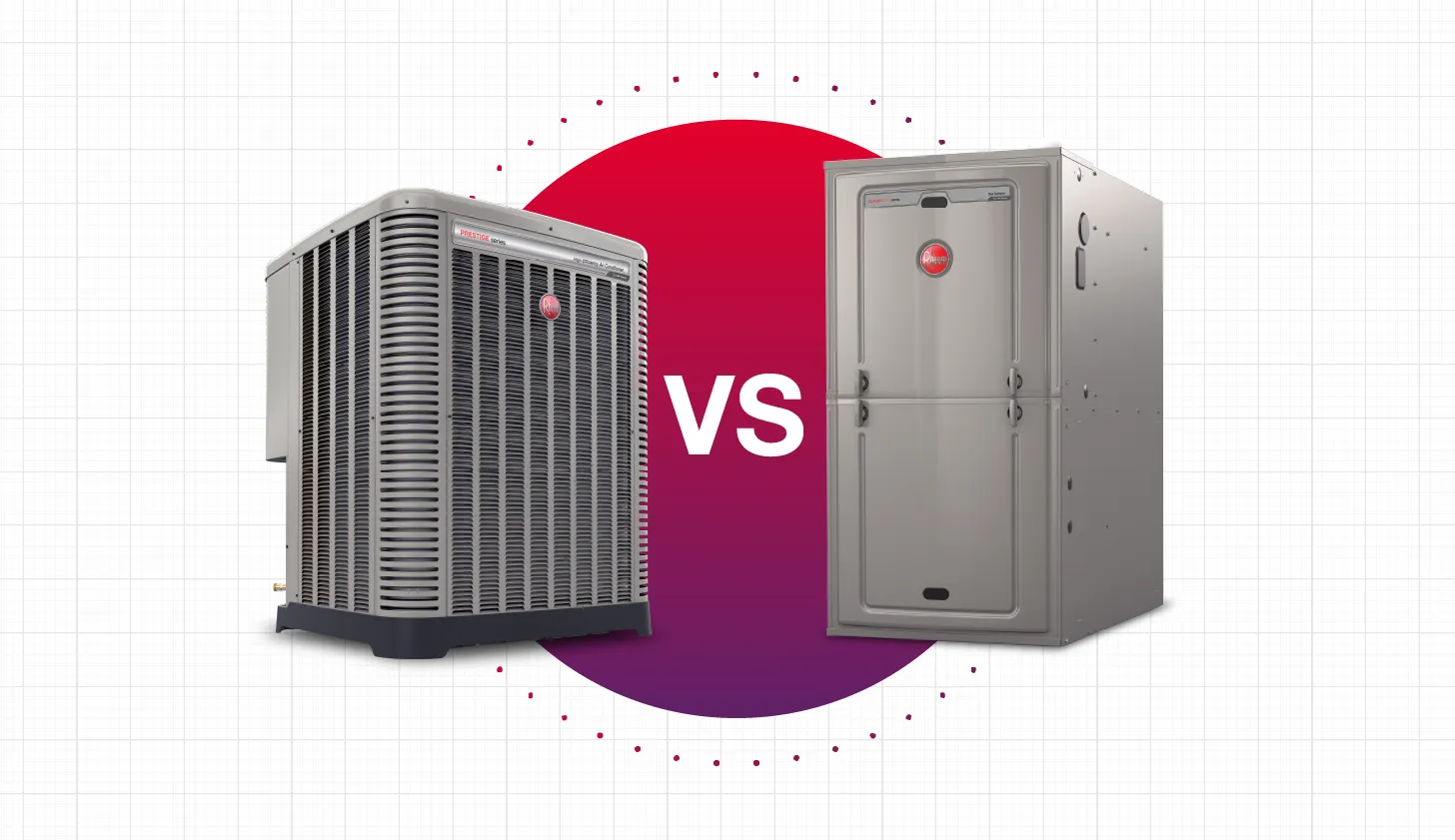
Furnace vs. Heat Pump: What’s the Difference?
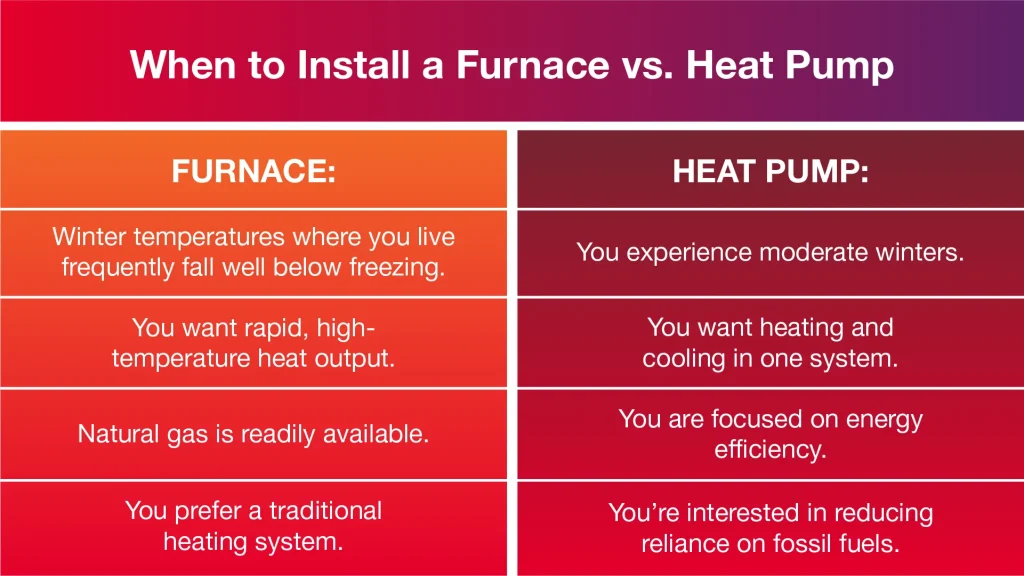
When to Install a Furnace
A furnace generates heat by burning fuel, such as natural gas, propane or oil, or by using electricity. The heated air is distributed through ductwork and vents throughout your home.
Furnaces have long been the go-to solution for homes in consistently cold climates, such as the Upper Midwest, Northern Plains, and parts of the Northeast.
A furnace may be ideal if:
-
-
- Winter temperatures frequently fall well below freezing
- You want rapid, high-temperature heat output
- Natural gas is readily available
- You prefer a traditional heating system
-
Gas furnaces are particularly effective at delivering powerful, consistent heat during prolonged cold snaps.
When a Heat Pump is a Better Option
Unlike a furnace’s ability to generate heat, heat pumps transfer heat. They use electricity to extract warmth from outside, and transfer that heat indoors. For this reason, heat pumps have traditionally been recommended for homes in milder climates, such as Texas, the Southeast, or coastal regions.
In the summer, heat pumps can also provide cooling to your home, unlike a furnace, which requires a separate air conditioning unit to provide both heating and cooling.
A heat pump may be ideal if:
-
-
- You experience moderate winters
- You want heating and cooling in one system
- You are focused on energy efficiency
- You’re interested in reducing reliance on fossil fuels
-
Because heat pumps transfer heat rather than generate it, they can operate very efficiently in moderate conditions.
But here’s what’s changing: heat pump technology is evolving rapidly.
Heat Pump Technology is Advancing for Cold Climates
In recent years, manufacturers have invested heavily in improving cold-weather heat pump performance.
Today’s advanced systems are engineered to operate effectively at much lower outdoor temperatures than earlier generations. In fact, manufacturers like Rheem are competing in national innovation initiatives such as the U.S. Department of Energy’s Cold Climate Heat Pump Technology Challenge.
Rheem announced that its next-generation heat pump surpassed the DOE’s cold-climate performance requirements —a significant milestone in expanding viable heat pump adoption in colder regions. You can read more about that achievement here.
These advancements are reshaping the traditional furnace vs. heat pump decision, especially for homeowners in northern climates who previously had limited heat pump options.
The Best of Both Worlds: Dual-Fuel Systems
For homeowners in regions with both mild and freezing conditions, a dual-fuel system (also called a hybrid system) offers flexibility.
If you’re in a region offering rebates or incentives to switch to heat pumps, a dual-fuel system might be the ideal solution. Sometimes called a hybrid system, a dual-fuel system pairs a heat pump with a gas furnace. On cold days, the heat pump handles heating efficiently, and during extreme cold, the system switches to the gas furnace, giving you the best of both worlds.
A dual-fuel system pairs a heat pump for moderate temperatures with a gas furnace for extreme cold. The system automatically switches between the two based on outdoor temperatures, optimizing both comfort and efficiency.
This approach allows homeowners to benefit from:
-
-
- Energy savings during mild weather
- Strong heating performance during cold snaps
- Potential eligibility for energy rebates
-
As heat pump technology continues to improve, dual-fuel systems are becoming an increasingly strategic solution in transitional climates.
Maintenance Matters for Any Heating System
As with any heating and cooling solution, how well your furnace or heat pump heats your home also depends on the maintenance of your heating system. No matter the unit, a heating system will last longer and operate more efficiently with regular maintenance. Best practices include replacing air filters regularly, scheduling annual system check-ups with your local Pro Partner®, keeping outdoor units clear of debris and ensuring proper airflow and duct sealing.
With routine maintenance, both furnaces and heat pumps can deliver reliable performance for years to come.
Talk to a Professional Before You Decide
Climate, insulation, ductwork, and local energy costs all influence the right heating solution for your home.
A trusted HVAC professional can evaluate your specific needs and recommend a system designed for long-term comfort and efficiency.
Find a Rheem® Pro Partner® in your area to schedule a maintenance checkup or consult about installing a new home heating system today.